

Do I Really Need Containers?
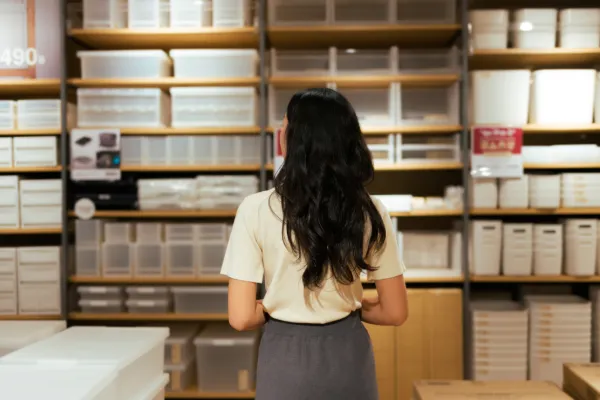
You're organizing a space in your house, and you begin to ask, "Do I need containers?"
Do I need containers for my house? Are there special ones that are better than others? Do I need to spend a lot of money on them? Does it have to look like Pinterest? Is it going to slow down our work together?
I hear some version of these questions on almost every project I take on. And underneath every one of them is the same real question you are actually asking: I do not have the time or the energy for this, so please just tell me what matters.
Fair. So let us settle it, container by container, so you spend your time and your money on what earns a place in your home, and skip the rest without a second thought.
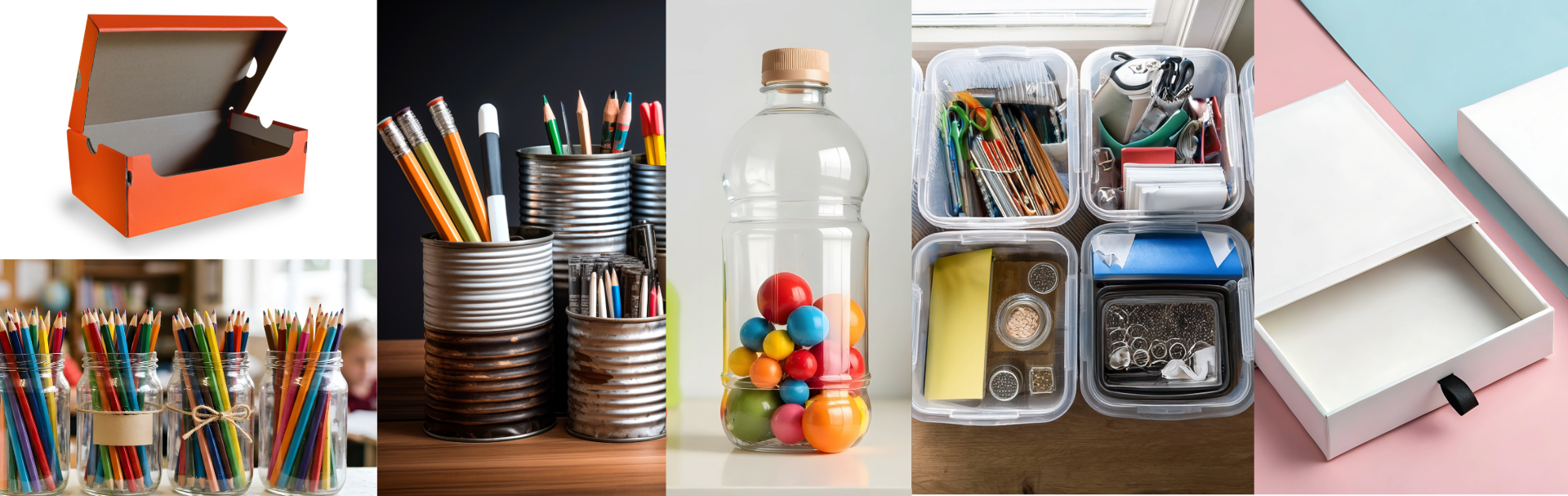
Here is the one idea to hold onto as you read: organization really just means containment. A box of pencils keeps the pencils organized, whether that box is the one it came in, a tin can, a big black-and-yellow tote, or a clear bin in a drawer. Socks are organized whether they are thrown loose in a drawer or folded into little balls between dividers. It all counts. What matters is who is using the space, what they are using it for, and what they are actually trying to accomplish. That is what decides which container is right, not what is trending. This is not a Pinterest problem. It is a capacity problem, and the right container in the right spot is one of the fastest ways to get some of that capacity back.
Let's look at the types of containers
Everyday Items and Repurposed Packaging
Shoe boxes, tin cans, glass jars, rubber bands, delivery boxes, and any other packaging you already have on hand. Nothing you had to buy for the sake of organizing, but it works.
Pros
You already have them, so there is no cost
Easy to find and easy to replace
No assembly required
Perfect for testing a system before you invest in more expensive options
Cons
They break down over time
Inconsistent sizes make stacking and uniformity hard
Cardboard especially can disintegrate from age, moisture, bugs, or mold
Not see-through, so contents can become an out-of-sight, out-of-mind abyss
Consider the safety tin cans especially can have sharp edges
Opaque Plastic Bins and Totes
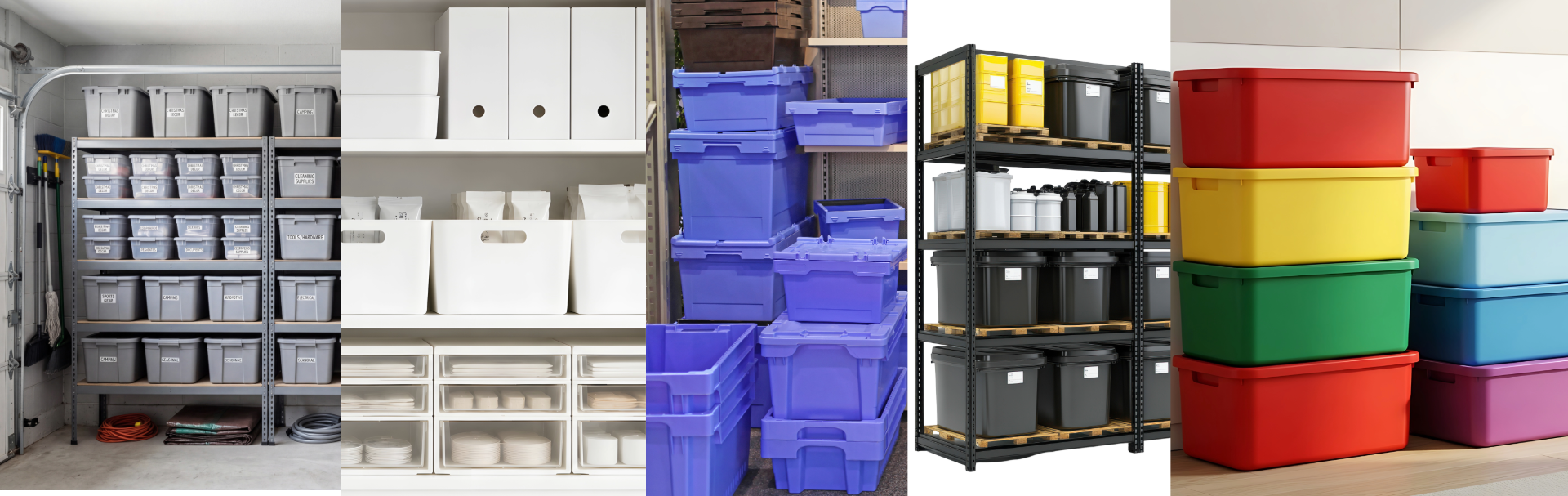
The workhorse of cabinets, closets, playrooms, and drawers. Larger totes are the go-to for basements and garages.
Pros
Can be bought in matching sizes and colors for a uniform look
Durable and holds up against moisture and bugs
Often comes with a lid, and labels adhere easily
Can hold real weight and is easy to clean
Heavy-duty
Cons
Because you cannot see inside, it is easy to forget what is there, which is a real struggle for ADHD brains, especially
Can warp over time from temperature changes or scuffing
Can crack if dropped
A big tote fully packed can get too heavy to lift safely
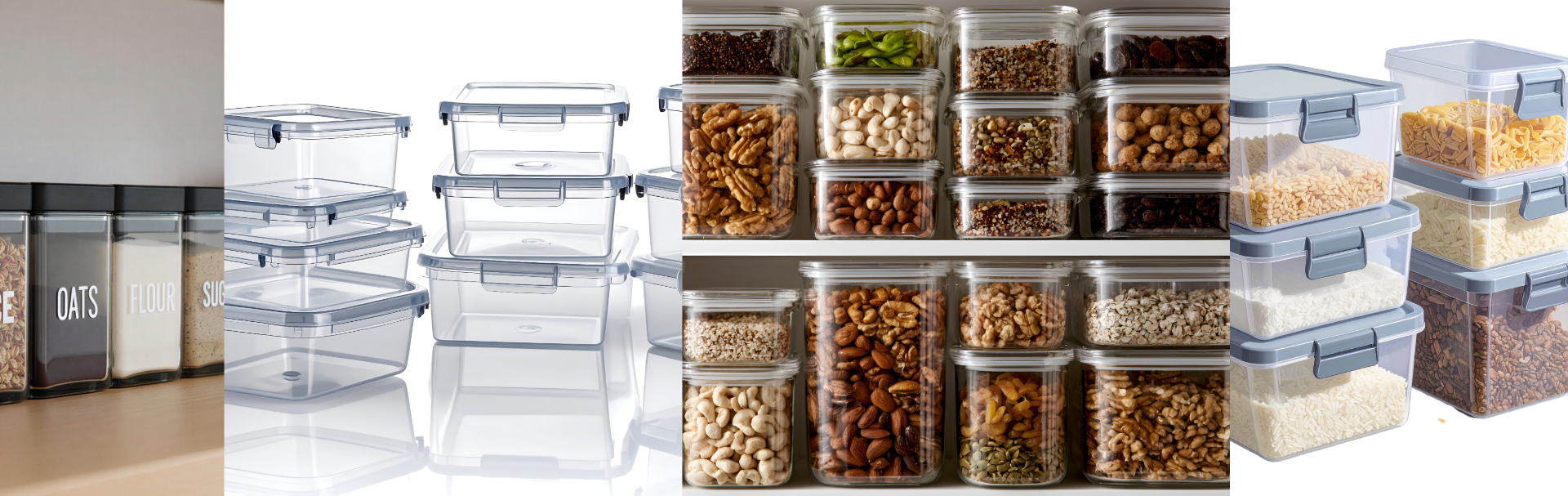
Airtight Plastic Containers
Built for food and perishables in the fridge or pantry, and sometimes medicine in the bathroom.
Pros
Seals out air to preserve freshness and keeps bugs out
Often stackable, easy to clean, and labels adhere well
Square and rectangular containers use pantry space far better than round ones,
Cons
Sets rarely match once you mix brands
Can be costly, and sizing varies by content
Breakable if dropped
Not all are dishwasher or freezer safe, so read before you buy a whole set
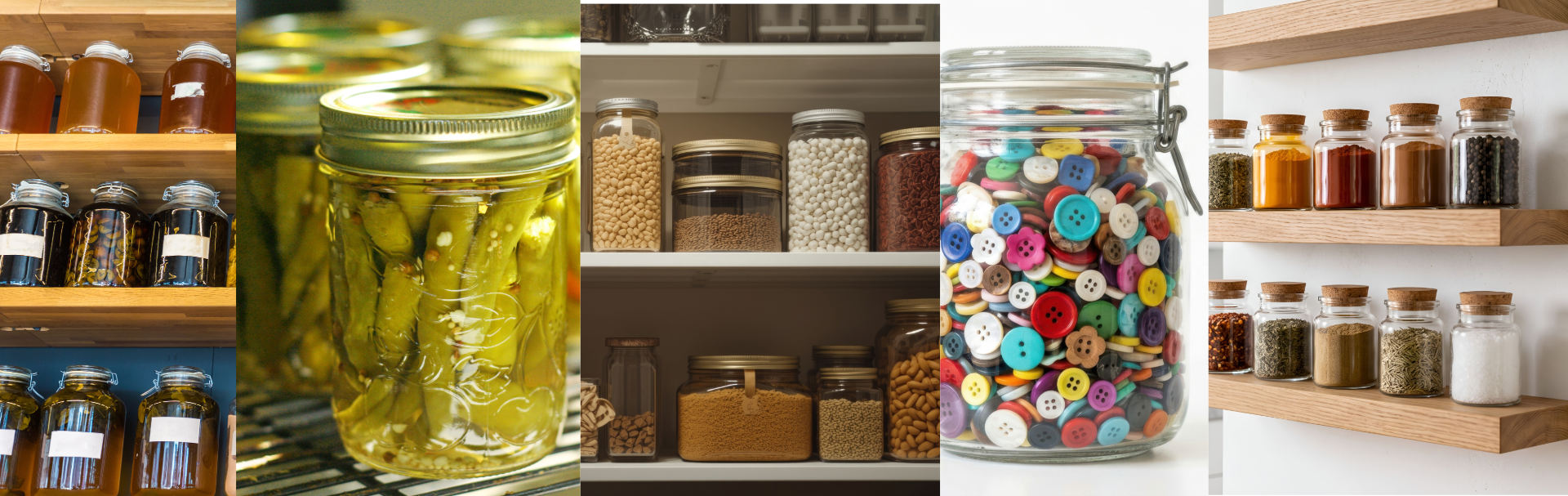
Mason and Glass Jars
Great for craft supplies, dog treats, or long-term food storage that needs to last for years.
Pros
Widely available, and lids and bases interchange across brands
Glass is food safe and can be vacuum sealed for freshness
Easy to clean and label, and can last for decades
Cons
Hard to stack
Breakable, and sizes vary
Glass is heavy, and a shelf full of jars adds up fast, which matters for wall-mounted or particle board shelving
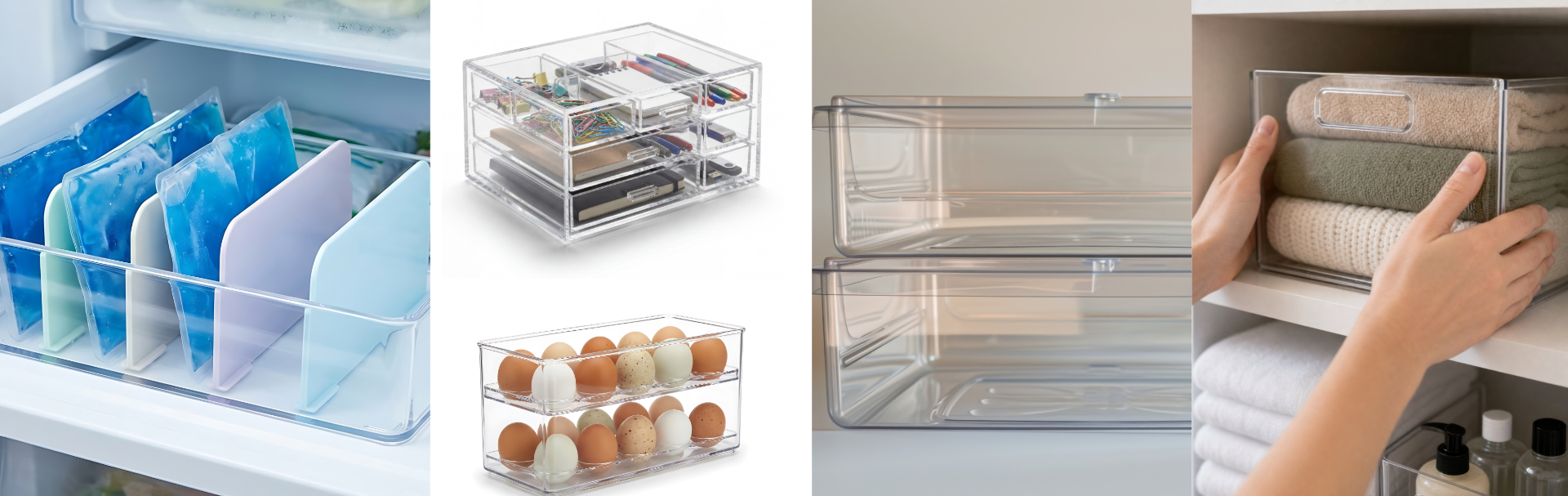
Clear Acrylic Containers
Ideal for kitchens, bathrooms, offices, and playrooms, especially for the items you reach for daily and need to see at a glance.
Pros
Many brands offer standardized shapes that stack and work as a system
Being able to see inside means you never forget what is there
Labels adhere easily, and cleanup is simple
Often designed for specific purposes (i.e., egg, drink cans, divided storage)
Cons
If you commit to one brand, replacements can be hard to find later
Because everything is visible, they can add to visual clutter if that bothers you
Shows fingerprints and is breakable if dropped
These will be the priciest option
These can yellow or scratch with time and sun exposure
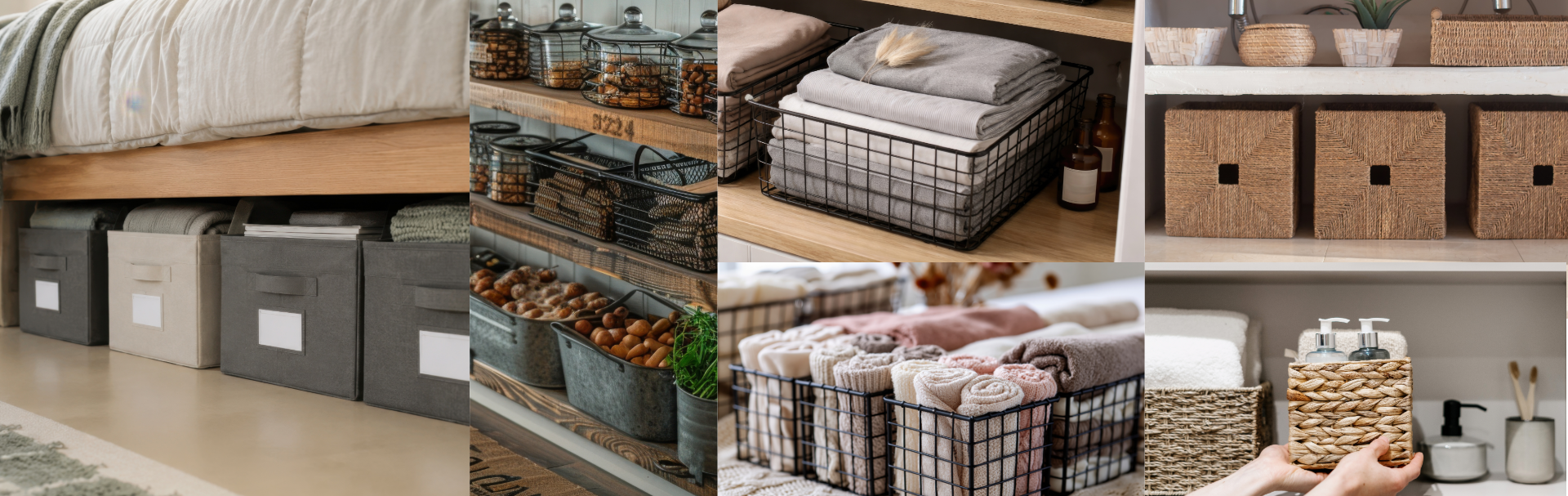
Fabric, Metal, and Woven Containers
A favorite for blankets, clothing, decorative storage, and under-bed or closet space.
Pros
Matches home aesthetics and feels upscale
Comes in a wide range of sizes and shapes to fit the item
Some are washable, and many are open enough to see inside easily
These are light and safe for kids' spaces since there is nothing to break or cut
Cons
Deteriorates faster and is sensitive to moisture and bugs
Style can feel dated quickly, and pieces are hard to stack
Labels usually need extra supplies to adhere, and some can scratch shelves or cabinets
Much harder to contain small or loose items well since many have open weave

So, Which Container Is Right for You?
Once you know the pros and cons, the real question is not which container is trending. It is what you need the container to do for you and for the people you love who share this home.
Match the container to the goal.
And before you buy anything, measure the space. A container is only right if it actually fits the shelf, drawer, or cabinet it needs to live in. Buying before measuring is one of the most common mistakes people make, often long before they ever call an organizer, and it is exactly the kind of thing that eats up more of your time and energy than it should.
If executive function is a challenge
Choose containers with the fewest hurdles between you and the item.
Clear, so you can see what is inside
Labeled, so you know exactly what it is
No lids
Stored out in the open, not behind closed doors
If you are protecting items from moisture, air, or pests
Airtight containers for food and perishables
Lids are non-negotiable
Moisture barrier, locking lids for flood-prone areas
Avoid cardboard where possible
If you want a polished, curated look
Choose one uniform style, color, and material per space
Lids are optional, and often skipped for woven, metal, or fabric pieces
If you want to eliminate visual clutter
Use solid colored containers and stick to one color
Add lids where possible
Keep size, color, and material uniform per space
If the space is for kids
Use durable plastic and avoid glass
Skip lids that are hard for little hands to manage
Use color coding to make organizing fun and learnable
Avoid anything too heavy or stored too high
If the space is for holiday decor
Use durable plastic and avoid glass
Choosing color-coded containers, or at least labels will help you quickly identify the season
Containers meant for specific tasks like ornaments, lights, wrapping paper, or wreaths will help prevent damage to items or annoyance for you.
Plain and simple, there is no single right container. There is only the right container for what you actually need it to do, and for the time and energy you actually have to give it. That is the difference between a house full of bins and a home that works as hard as you do.
A home that works is not a luxury. For a busy family, it is the foundation everything else is built on.
If you already know this is bigger than a bin run, that is what I am here for. Book your discovery call. One conversation, no judgment, and we will get your time and your energy back where they belong.
Organize With Kurnsie helps busy professionals across Central Ohio, including Delaware, Powell, Lewis Center, Dublin, Westerville, Worthington, New Albany, and Columbus, get their time and energy back from the clutter they never had time to deal with.
We do not sell perfect. We sell homes that work as hard as you do, with systems simple enough for your whole family to actually keep up.
If you are ready for a home that finally catches up to the rest of your life, we are here. Book your discovery call, and let's get started.


